
For many adults, speaking is an effortless part of daily life, but neurological speech disorders can make communication a real challenge. These disorders are caused by changes or damage to the brain or nervous system and often affect people who have had a stroke, brain injury, or conditions like Parkinson’s disease or multiple sclerosis. These issues can impact everything from casual conversations with friends to participating in work or societal life.
Common disorders linked to neurological impairements are aphasia, dysarthria or apraxia. The symptoms can range from slurred speech and word-finding difficulty to inconsistent speech errors and reduced facial expression.
Aphasia is a language disorder affecting the ability to understand or use language, but also reading and writing and is often caused by stroke or brain injury. There are two types of aphasia. In expressive aphasia, patients know what they want to say, but struggle finding or saying the words, whereas in receptive aphasia, patients can speak normally, but have trouble understanding what others say.
Dysarthria results from weakness, facial paralysis, or lack of coordination in the muscles used for speech, often due to neurological conditions like Parkinson’s disease or multiple sclerosis.
In Apraxia the brain struggles to send the correct signals to the muscles needed for speech and is often a result of a stroke, brain injury or brain tumor.
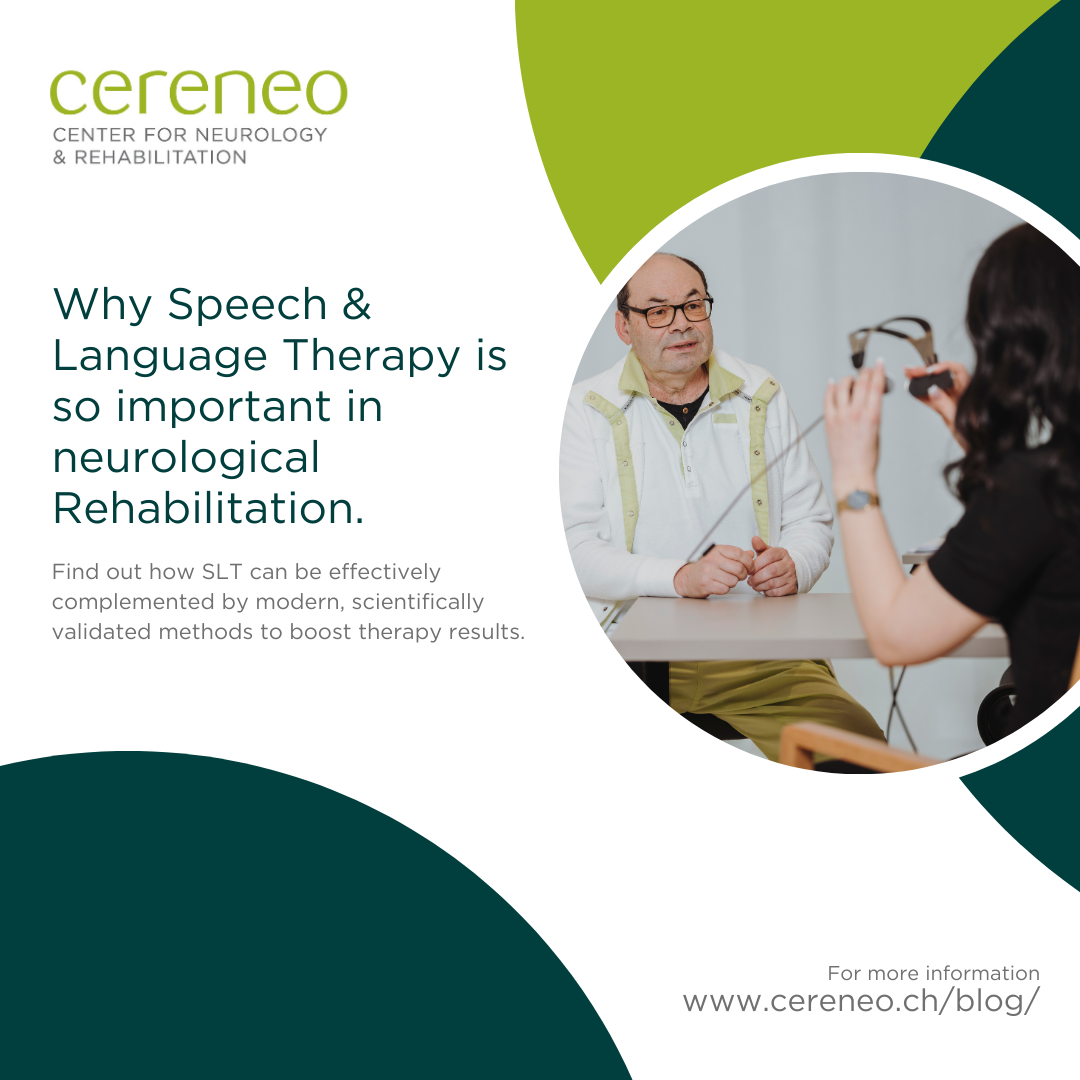
To recover from any of these speech disorders after a neurological incident, speech and language therapy (SLT) is crucial for patients. At cereneo we have a team of experienced speech therapists trained in assessing and treating speech, language, and voice issues. SLT is typically paired with cognitive and movement therapy as part of an individual and interdisciplinary therapy approach to address all deficits to maximize overall recovery.
In speech therapy sessions, therapists work one-on-one with each patient to address the specific difficulties, such as articulation, slow speech, and vocal control, through customized exercises and techniques designed to meet each person’s unique needs.
Classical speech therapy is increasingly being complemented by modern, scientifically validated methods. These create new opportunities to make rehabilitation more effective and sustainable:
The brain is stimulated with low electrical currents to enhance learning ability and neuroplasticity. Combined with language exercises, this can lead to better therapy outcomes.
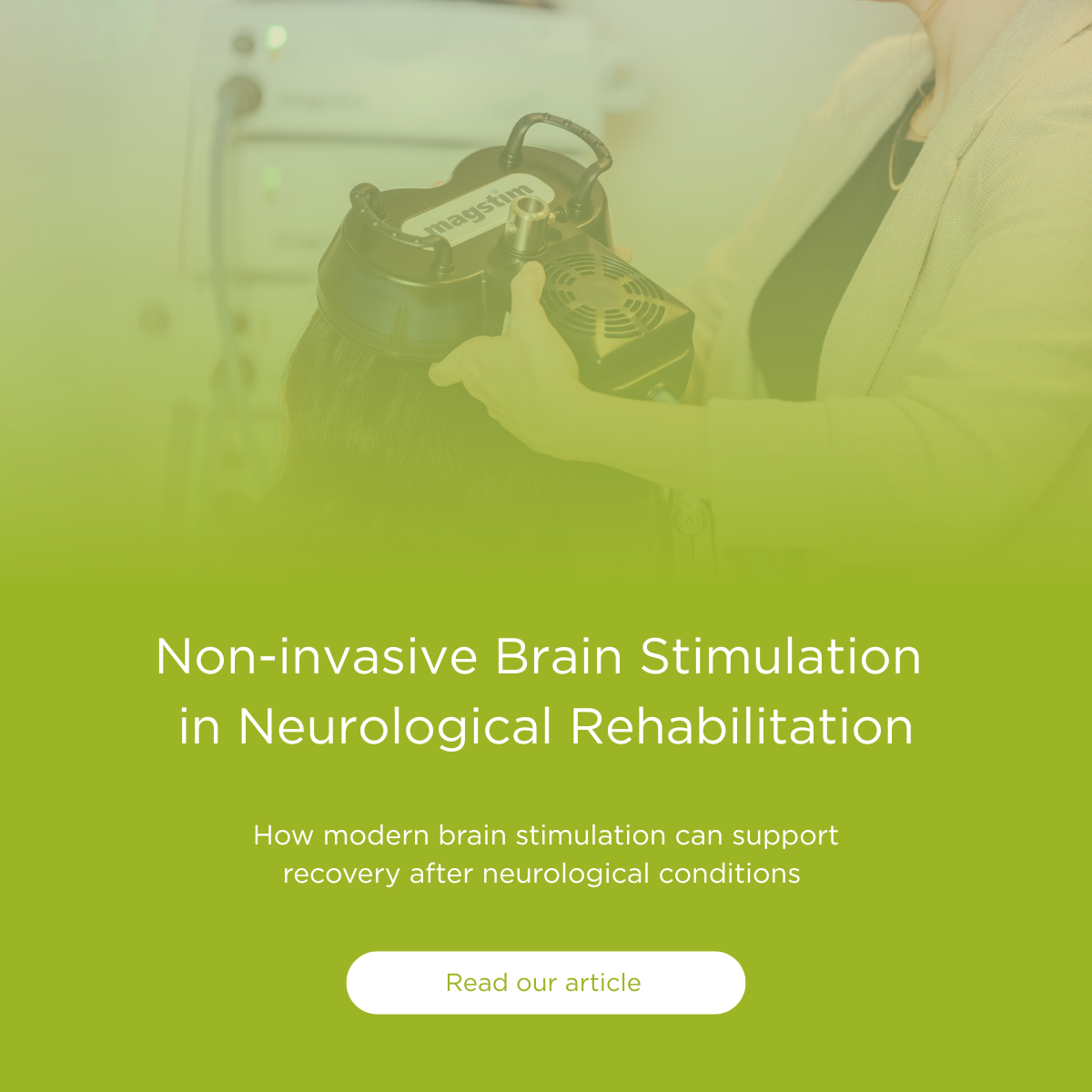
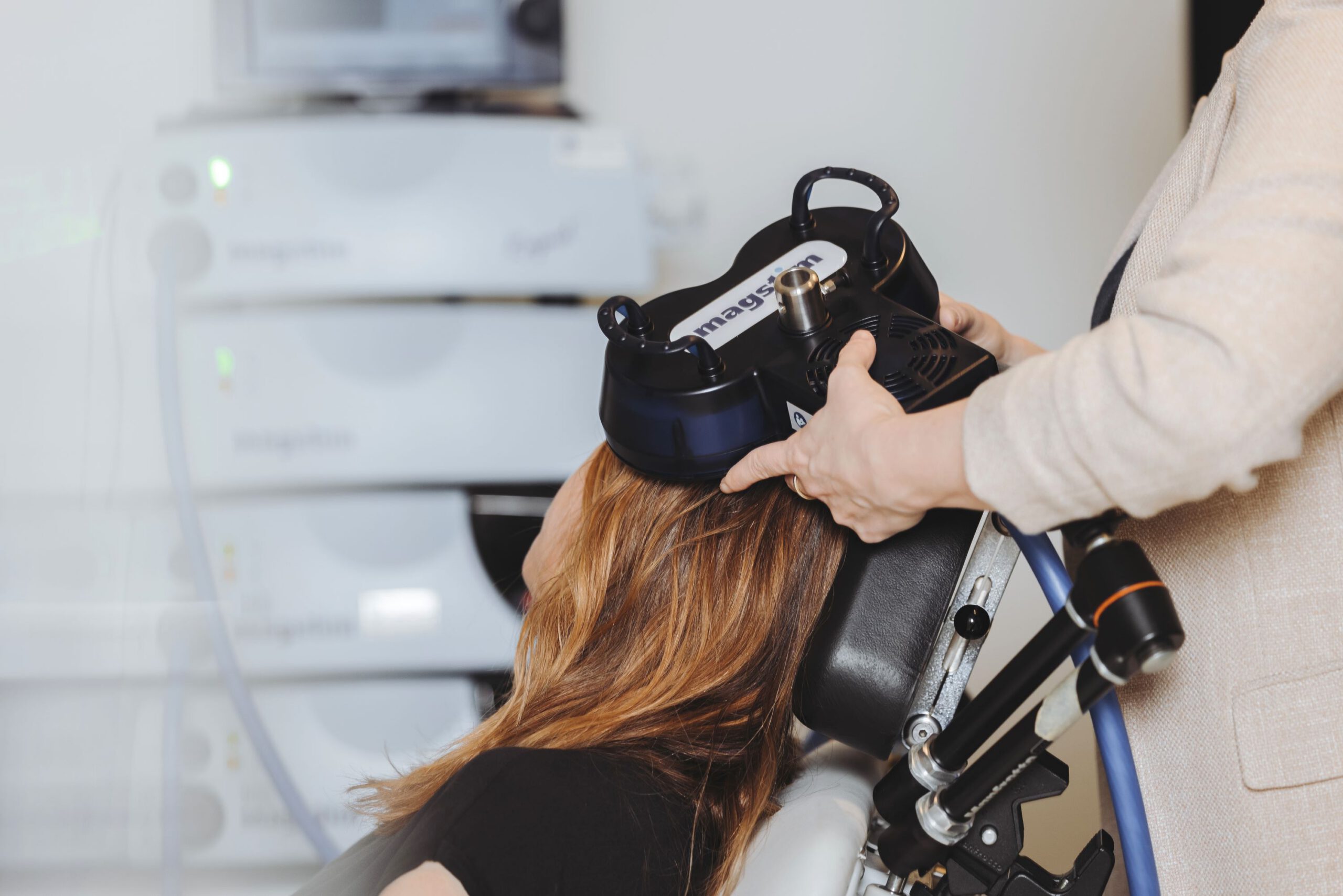
This non-invasive method uses magnetic fields to specifically activate certain brain regions, thereby supporting language functions. There is evidence that intensive speech therapy may improve recovery from poststroke aphasia and, when combined with repetitive TMS, therapy outcomes may be further enhanced
A newer method that stimulates the vagus nerve through the skin. Studies show that it can positively influence attention and learning ability — also in language rehabilitation.
Particularly effective for swallowing disorders, this therapy activates the muscles and helps restore safe swallowing.
In addition to device-based methods, digitalization is playing an increasingly important role in speech therapy:
The combination of classical speech therapy, modern neurostimulation, and digital solutions demonstrates how diverse and interdisciplinary neurological rehabilitation has become today. The goal is not only to improve speech and communication abilities, but also to sustainably strengthen patients’ independence, participation, and quality of life.